
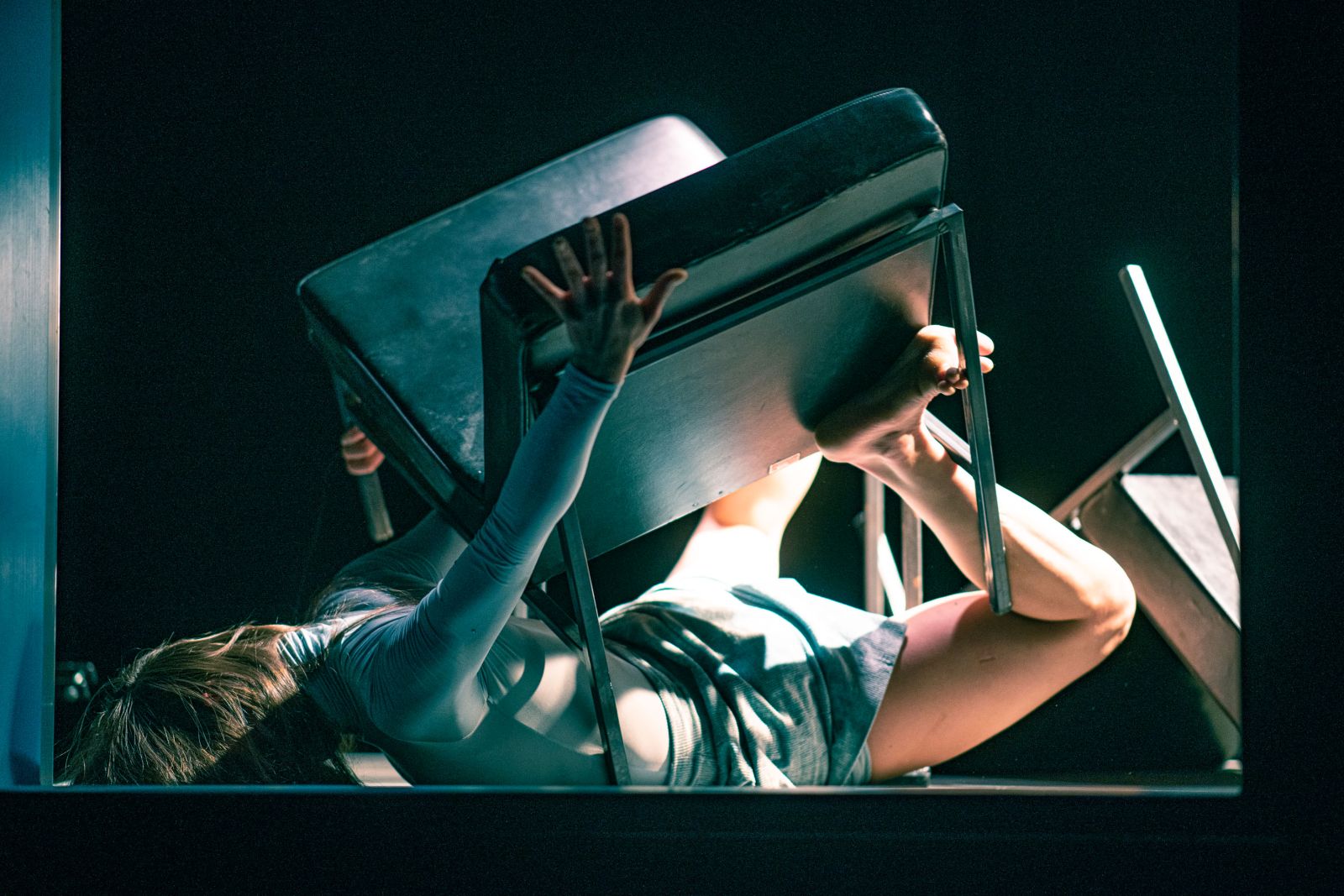
Anton Podbevšek Theatre (SLO)
Director: Sanja Nešković Peršin
Duration: 60’
Language: Slovenian
With macedonian surtitles
Choreography: Sanja Nešković Peršin
Cast: Mateja Železnik, Luka Ostrež, Filip Mramor, Luka Bokšan, Andrej Tomše
Credits:
Co-creators and Performers: Mateja Železnik, Luka Ostrež, Filip Mramor, Luka Bokšan, Andrej Tomše
Curator: Tevž Logar
Set Design and Video Design: Atej Tutta
Costume Design: Uroš Belantič
Music: Sašo Kalan
Lighting Design: Jaka Šimenc
Authors of the Text in the Performance: Filip Mramor, Luka Bokšan, Andrej Tomše, Tevž Logar
Lyrics: Katja Klopčar
Language Consulting: Barbara Rogelj
Creative Design: Eva Mlinar
Wardrobe: Nataša Recer
The performance also uses music by J. S. Bach
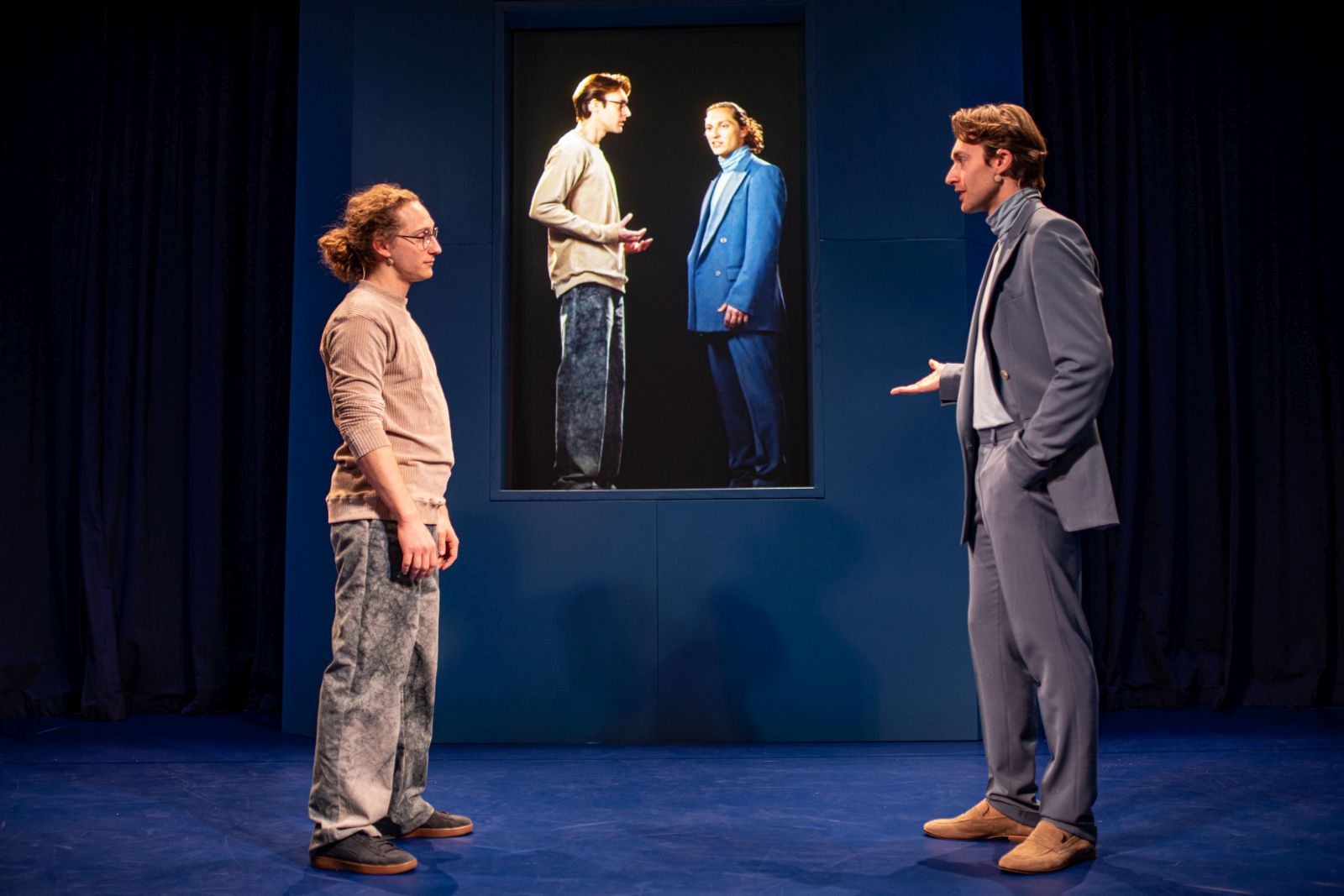
“Short cuts” by Sanja Nešković Peršin unfold like a walk through an exhibition that raises questions about confinement and the traps of contemporary life. Each scene functions as conceptually and visually autonomous – like an artefact of a fleeting moment, in which our struggle, our longing, and our realization are reflected. Yet all these images merge into a single narrative: the journey of a protagonist wandering through a labyrinth, where each section conceals a new trap, a new mirror of time, in which our relationship to freedom, love, resistance, desire, control, violence, and emotions is refracted.
The labyrinth is thus not merely a stage that the viewer observes from the outside, but a sequence of spaces that unfold as a striking reflection on our everyday lives. At its core, the central idea turns to Borges’s story “The Two Kings and the Two Labyrinths,” in which the author establishes a tension between the world of matter and spirit – between the stone labyrinth, the brilliant architecture of human intellect and arrogance, and its opposite: God’s labyrinth, the desert, infinite and uncontrollable. In a subtle connection with Borges’s symbolism, through the stories of Sanja Nešković Peršin, the stone labyrinth becomes the stage of our contemporary traps, while the desert unfolds as the ultimate space where all human attempts at control fall away. And perhaps it is precisely there, in that moment when direction is lost, that the possibility of freedom emerges – a small, yet invaluable step out of the labyrinth.